
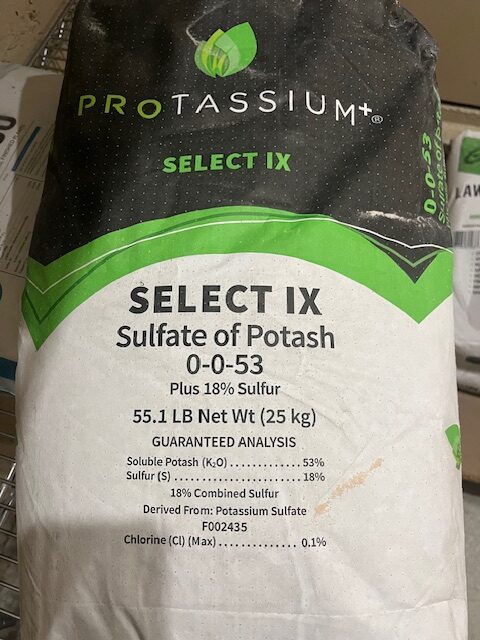
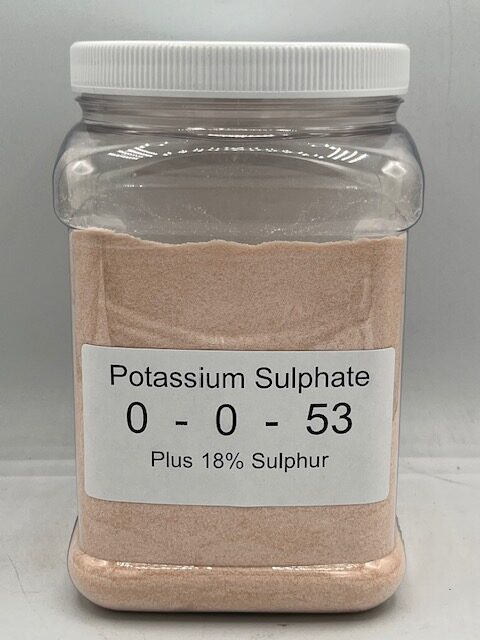
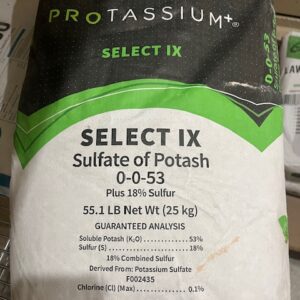
Potassium Sulphate (K2 So4)
From $15.00
In-store, curbside or delivery!
- Private parking & loading area around back
- Discreet package & labeling on all deliveries
- Minimum 1-year warranty on all products
Potassium Sulphate (K₂SO₄)
Water-Soluble Potassium and Sulphur Fertilizer
Potassium Sulphate, also known as K₂SO₄, supplies two important plant nutrients. It provides potassium and sulphur without adding nitrogen.
This makes it useful when plants need additional potassium without increasing nitrogen levels. Its highly soluble form also makes it suitable for hydroponics, fertigation, and greenhouse growing.
Key Features
- Provides potassium and sulphur
- Contains no nitrogen
- Highly soluble fertilizer
- Useful for hydroponic nutrient programs
- Suitable for fertigation systems
- Supports strong plant development
- Helps maintain balanced nutrient programs
- Useful during flowering and fruit production
- Easy to incorporate into custom fertilizer blends
- Suitable for greenhouse and commercial growing
What Is Potassium Sulphate?
Potassium Sulphate is an inorganic fertilizer containing potassium and sulphur. Its chemical formula is K₂SO₄.
It is commonly used when growers want to increase potassium levels without adding additional nitrogen. This gives growers more control over their overall nutrient balance.
Potassium plays an important role in several plant processes. Sulphur also supports essential plant functions and nutrient metabolism.
Understanding the K₂SO₄ Analysis
Potassium Sulphate is commonly sold as a concentrated source of potassium and sulphur.
The fertilizer analysis can vary by product and grade. Always check the product label or specification sheet for the exact guaranteed analysis.
Typical nutrient contribution
| Nutrient | Function |
|---|---|
| Potassium (K) | Supports water regulation, enzyme activity, and plant development |
| Sulphur (S) | Supports amino acid production and nutrient metabolism |
The potassium content is often expressed as K₂O equivalent on fertilizer labels.
Therefore, the number shown on a fertilizer analysis does not represent elemental potassium directly.
Potassium for Plant Development
Potassium is one of the three primary plant nutrients.
It helps regulate water movement throughout the plant. It also supports enzyme activity and overall plant metabolism.
Adequate potassium can help plants maintain strong growth and efficient nutrient use.
For flowering and fruiting crops, potassium is often an important part of a balanced feeding program.
Sulphur for Plant Nutrition
Sulphur is a secondary plant nutrient.
Plants use sulphur to produce certain amino acids and proteins. It also contributes to several important metabolic processes.
Potassium Sulphate provides sulphur alongside potassium. This can make it useful when both nutrients are required.
Excellent for Custom Nutrient Programs
Potassium Sulphate gives growers another way to fine-tune fertilizer recipes.
Because it does not supply nitrogen, it can be used when potassium needs to increase without raising nitrogen levels.
This can be particularly useful with custom hydroponic and fertigation formulas.
Useful for Hydroponic Growing
Potassium Sulphate can be incorporated into properly formulated hydroponic nutrient programs.
Its soluble form allows nutrients to become available through the nutrient solution when correctly mixed.
Always consider the complete nutrient recipe before adding additional fertilizer.
Nutrient concentrations should be calculated carefully. Water quality can also affect the final solution.
Suitable for Fertigation
Potassium Sulphate can be used in fertigation programs where the product is compatible with the irrigation system.
It can provide potassium and sulphur through irrigation water.
For automated systems, proper mixing is especially important. Undissolved material can create problems with pumps, injectors, filters, or emitters.
Useful During Flowering and Fruit Production
Potassium requirements can become significant during reproductive growth.
Potassium Sulphate can therefore be useful in fertilizer programs designed for flowering or fruit production.
However, potassium should always be balanced with the plant’s other nutritional requirements.
More fertilizer is not necessarily better. Follow a tested nutrient recipe or crop-specific feeding program.
Important Mixing Information
Always dissolve Potassium Sulphate thoroughly before adding it to a nutrient reservoir.
For concentrated stock solutions, compatibility with other fertilizers must be considered.
Avoid combining concentrated fertilizer products unless their compatibility has been confirmed.
Calcium-containing fertilizers can require particular attention when preparing concentrated solutions. Poor mixing can result in precipitation and nutrient loss.
Best practice
- Start with clean water.
- Measure the required amount accurately.
- Dissolve the product completely.
- Add other compatible nutrients according to your nutrient recipe.
- Check the final solution before use.
- Monitor pH and electrical conductivity as appropriate.
How to Use Potassium Sulphate
Application rates depend on the crop, growing method, water quality, and existing nutrient program.
For that reason, there is no single rate that works for every growing situation.
For Hydroponics
Use Potassium Sulphate as part of a complete nutrient formula.
Calculate the amount required based on the desired potassium and sulphur levels.
For Fertigation
Dissolve the required amount in irrigation water according to your fertilizer program.
Make sure the product is fully dissolved before entering the irrigation system.
For Custom Fertilizer Blends
Potassium Sulphate can be used as a potassium and sulphur component in custom nutrient formulations.
Accurate calculations are important when creating concentrated fertilizer recipes.
Storage and Handling
Keep Potassium Sulphate sealed when not in use.
Store it in a cool, dry location away from moisture.
Prevent contamination of the product. Moisture can cause fertilizer materials to cake and become more difficult to dissolve.
Always follow the manufacturer’s label and SDS for handling and storage requirements.
Ideal For
Potassium Sulphate is a useful fertilizer ingredient for:
- Hydroponic growing
- Greenhouse production
- Fertigation
- Commercial horticulture
- Custom fertilizer programs
- Flowering plants
- Fruit-producing crops
- Soil-based growing
- Nutrient balancing
- Potassium supplementation
Product Specifications
| Specification | Details |
|---|---|
| Product | Potassium Sulphate |
| Chemical Formula | K₂SO₄ |
| Common Name | Potassium Sulphate |
| Nutrients | Potassium and Sulphur |
| Nitrogen | None |
| Form | Dry soluble fertilizer |
| Suitable For | Hydroponics, fertigation, greenhouse and horticulture |
| Application | Use according to nutrient requirements and product specifications |
Frequently Asked Questions
What is K₂SO₄?
K₂SO₄ is the chemical formula for Potassium Sulphate. It supplies potassium and sulphur to plants.
Does Potassium Sulphate contain nitrogen?
No. Potassium Sulphate does not contain nitrogen.
This makes it useful when potassium needs to be increased without adding more nitrogen.
Is Potassium Sulphate suitable for hydroponics?
Yes. Its soluble form makes it suitable for properly formulated hydroponic nutrient programs.
Can Potassium Sulphate be used during flowering?
Yes. Potassium is an important nutrient during reproductive growth.
However, application should be based on the complete nutrient requirements of the crop.
Does Potassium Sulphate provide sulphur?
Yes. It provides sulphur along with potassium.
Can I mix Potassium Sulphate with other fertilizers?
It depends on the fertilizer combination and concentration.
Always confirm compatibility before mixing concentrated fertilizer solutions.
Is Potassium Sulphate water soluble?
Potassium Sulphate is soluble in water, although solubility is lower than some other potassium fertilizers.
Proper mixing and water temperature can affect how quickly it dissolves.
Buy Potassium Sulphate from Jon’s Plant Factory
Potassium Sulphate is a versatile fertilizer ingredient for growers who need potassium and sulphur without additional nitrogen.
It works well within carefully balanced nutrient programs for hydroponic, greenhouse, and horticultural applications.
Choose the appropriate quantity for your growing operation and always follow proper fertilizer mixing practices.
| Weight | N/A |
|---|---|
| Dimensions | N/A |
| Size |
Only logged in customers who have purchased this product may leave a review.
Related products
-

Cal-Mag Plus
From $31.99Select options This product has multiple variants. The options may be chosen on the product page -
General Hydroponics Dry KoolBloom
$319.00Select options This product has multiple variants. The options may be chosen on the product page -

General Hydroponics Diamond Nectar
$310.00Select options This product has multiple variants. The options may be chosen on the product page -
General Hydroponics FloraNova Grow
From $44.99Select options This product has multiple variants. The options may be chosen on the product page

Reviews
There are no reviews yet.